

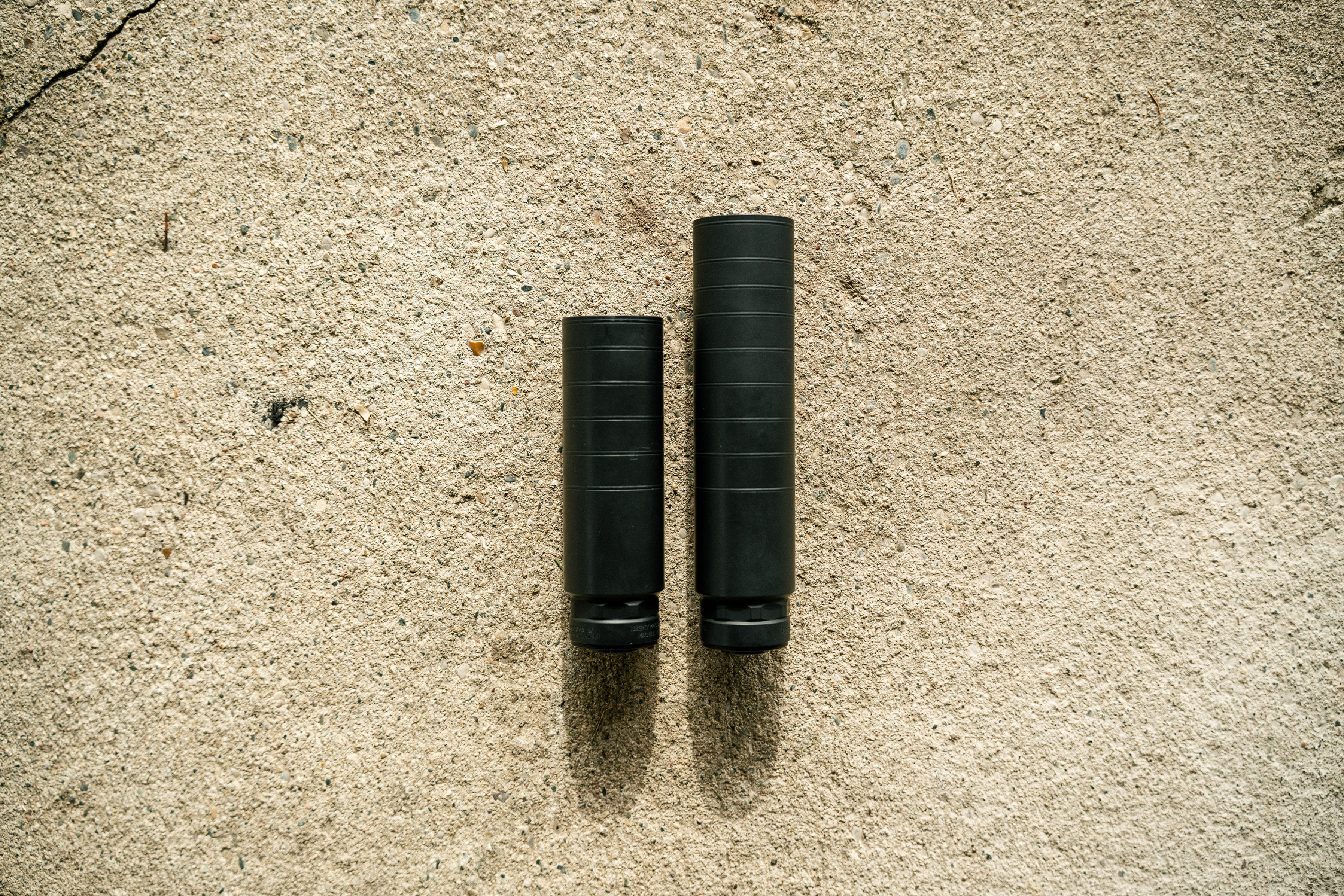
Does Suppressor Size Matter? Short vs. Long Suppressors Explained
When it comes to suppressors, size really does matter—but not in the way most people think. Choosing between a short (K-length) suppressor and a full-size suppressor isn’t about what’s “better.” It’s about what fits your rifle, your shooting style, and how you actually use your gear.
Let’s break it down.
Short Suppressors (K-Length / Compact)
Short suppressors are all about livability. They’re designed to stay out of the way while still delivering substantial performance improvements over shooting unsuppressed.
Pros of Short Suppressors
Lighter weight
Less weight hanging off the muzzle means reduced fatigue and better overall balance—especially noticeable on carbines and hunting rifles.
Shorter overall length
Compact cans are easier to maneuver in tight spaces like blinds, tree stands, vehicles, or dense cover.
Improved handling
Faster target transitions and a less “nose-heavy” feel make short suppressors feel more natural on dynamic rifles.
More realistic for everyday use
Because they’re less cumbersome, shooters are more likely to actually leave them mounted instead of taking them off after a few outings.
Often more affordable
With less material involved, many compact models come in at a lower price point (model dependent).
Cons of Short Suppressors
Reduced Suppression
Shorter silencers are slightly louder than longer silencers.
Best Use Cases for Short Suppressors
- AR-15s and short-barreled rifles
- Hunters prioritizing mobility and balance
- Shooters who value handling and speed
- “Always-on” suppressor setups
Long Suppressors (Full-Size)
Full-size suppressors are built for maximum performance. They prioritize comfort, recoil reduction, and sound reduction—often at the expense of size and weight.
Pros of Long Suppressors
Maximum sound suppression
More internal volume equals better decibel reduction, a softer tone, and less concussion at the muzzle.
Reduced recoil and muzzle rise
The increased gas dwell time helps smooth out recoil impulses and keeps the rifle flatter during shooting. A long push vs a short/sharp jab.
Compensates for shorter (louder) barrels
Longer suppressors do a better job taming sound and recoil on aggressive cartridges. Especially on compact barrel lengths optimized for hunting. Think 20-22″ barreled 7mm and .30 caliber magnums.
Ideal for precision shooting
Quieter shots and smoother recoil make it easier to spot impacts and stay consistent during long-range sessions.
Cons of Long Suppressors
Added weight and length
Combine a long barrel with a long suppressor and things can get unwieldy fast—especially in the field.
Less ideal for gas guns
Higher backpressure can increase blowback and gas to the face, making full-size cans less friendly on semi-auto platforms.
Best Use Cases for Long Suppressors
- Bolt-action rifles
- Precision and long-range shooting
- Shooters prioritizing comfort and sound reduction
- Range use over mobility
The Real Trade-Off
At the end of the day, the decision is simple:
- Short suppressor: livable, compact, and handy
- Long suppressor: quieter, smoother, and more forgiving
There’s no universal “best” suppressor—only the best one for your use case.
A backcountry hunter may gladly sacrifice a little sound reduction in exchange for a lighter, more manageable rifle. Meanwhile, someone spending their weekends smashing steel at distance will often find that the extra length and weight of a full-size suppressor is well worth the payoff in comfort and performance.
Built for Every Setup
No matter what you shoot—or how you shoot—we build suppressors to match the mission. From compact, always-on cans to full-size precision workhorses, there’s a solution designed to fit your rifle and your priorities.
Find the suppressor that fits your setup—and shoot better because of it.


Leave a Reply