

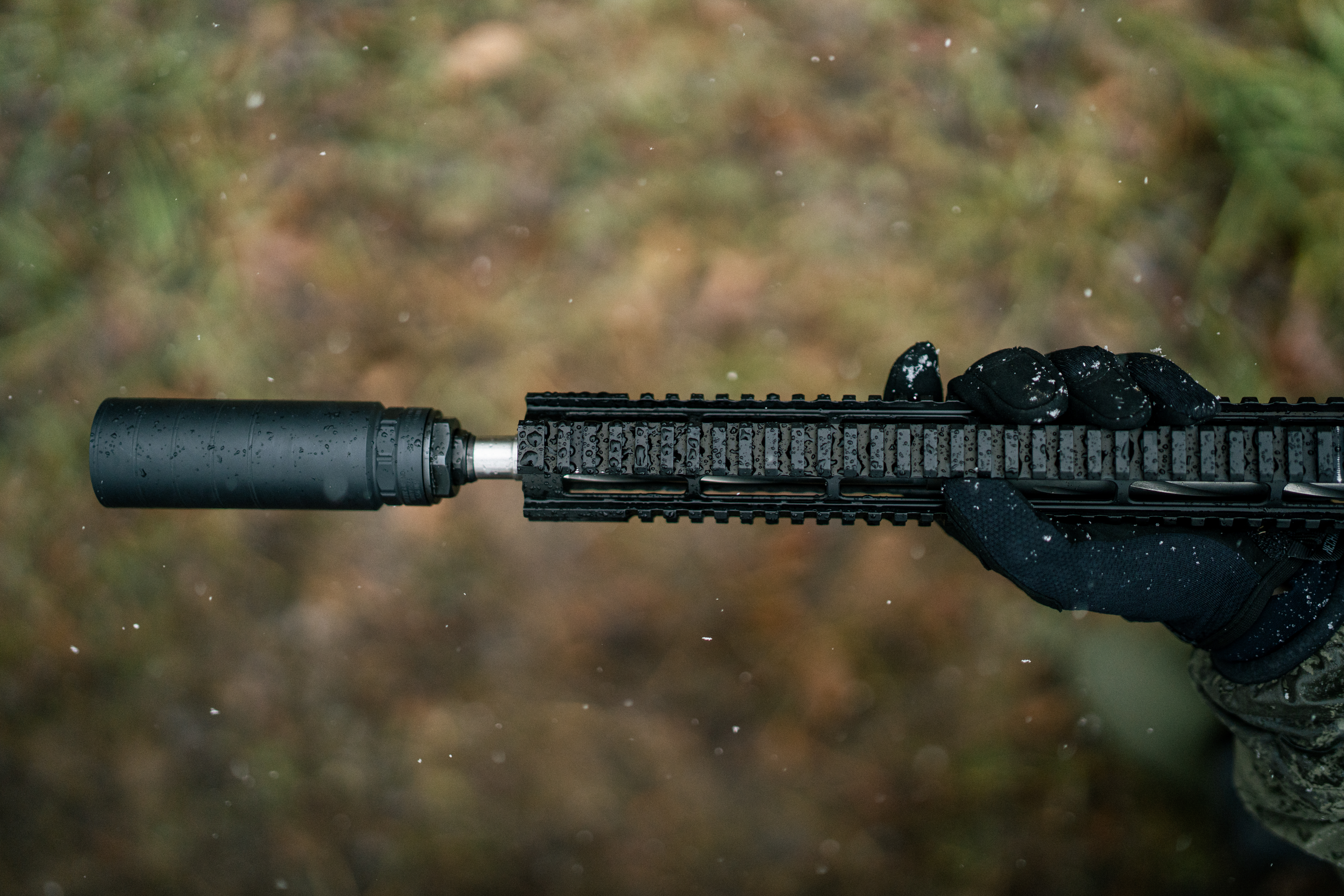
How Suppressor Design Is Evolving for Modern Rifle Platforms
Suppressor design has changed dramatically as modern rifle platforms have evolved. Today’s rifles — especially AR-pattern and precision bolt guns — place new demands on suppressor performance, forcing manufacturers to rethink traditional approaches.
The Shift From “Quiet” to “Balanced Performance”
Early suppressor designs focused primarily on sound reduction. Modern shooters expect more. A suppressor must now balance:
- Sound suppression
- Gas system reliability
- Recoil mitigation
- Weight management
- Accuracy retention
Suppressor engineering is now a performance balancing act.
Gas Management Is Now a Core Design Priority
Modern semi-automatic rifles are sensitive to gas pressure. Traditional high-backpressure suppressors can cause:
- Increased bolt speed
- Excess wear on components
- Gas blowback toward the shooter
- Reliability issues
New suppressor designs use:
- Flow-optimized baffle structures
- Reduced restriction pathways
- Internal geometries that control pressure buildup
The goal is to reduce shooter discomfort and improve reliability without sacrificing sound reduction.
Weight Matters More Than Ever
Precision rifles are getting lighter, and suppressors must follow that trend.
Design evolution includes:
- Titanium construction
- Shorter, more efficient suppressor bodies
- Optimized wall thickness
- Structural reinforcement without excess mass
A well-balanced rifle leads to better field performance, especially for hunters and long-range shooters.
Improved Mounting Systems
Modern rifle platforms demand secure, repeatable mounting.
Advancements include:
- Precision threaded interfaces
- Improved taper mounts
- Reduced point-of-impact shift
- Better concentricity
A suppressor must mount straight, lock securely, and maintain alignment shot after shot.
Durability for High-Performance Cartridges
Rifle cartridges are faster and higher pressure than ever. Suppressor designs now account for:
- Magnum cartridges
- Short barrels with higher pressure curves
- Sustained fire scenarios
This drives the use of stronger materials, reinforced blast areas, and advanced heat management.
The Direction of Suppressor Design
Suppressor design is evolving to match:
- Modern rifle engineering
- Advanced materials
- Precision manufacturing capabilities
- Shooter expectations for performance
Today’s suppressor is engineered as a precision component, not an afterthought.


Leave a Reply