

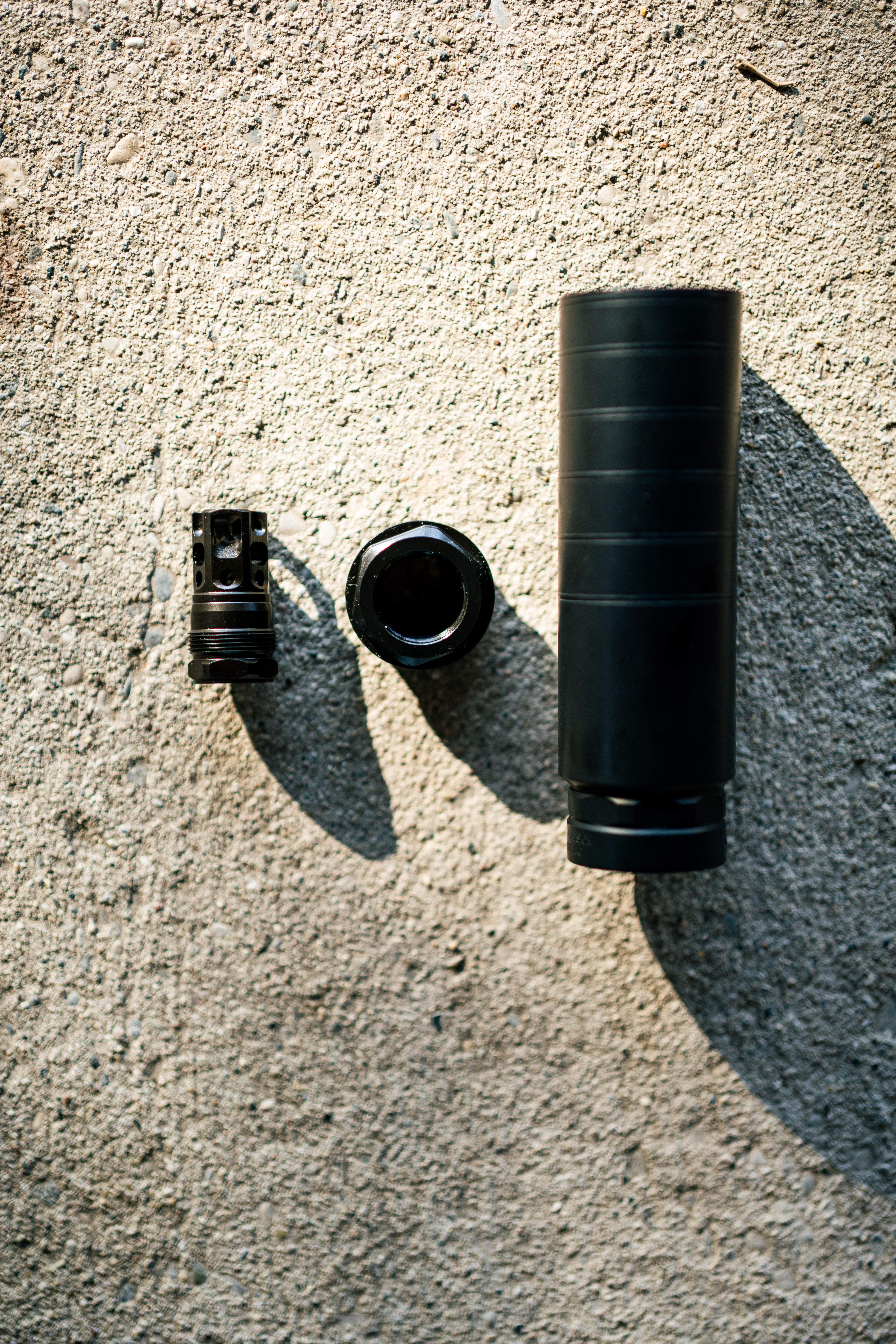
Muzzle Brake vs Silencer
When it comes to managing recoil and improving your shooting experience, two of the most common muzzle devices you’ll hear about are muzzle brakes and silencers. Both serve a purpose, both have loyal followings—and both excel in very different ways. If you’re trying to decide which direction to go, it’s worth understanding not just what they do, but how they actually perform in the real world.
What Does a Muzzle Device Really Do?
Every time you pull the trigger, you’re dealing with expanding gases, rearward force (recoil), and muzzle rise. A good muzzle device helps control those forces so you can shoot more accurately, recover faster, and stay more comfortable behind the rifle.
Muzzle brakes and silencers approach that job from completely different angles.
Muzzle Brakes: Maximum Recoil Control
A muzzle brake is designed to redirect gases out to the sides—and sometimes slightly backward—to counteract recoil. The result is immediate and noticeable.
What they do well:
- Dramatically reduce recoil (especially on magnum calibers)
- Minimize muzzle rise, helping you spot your own impacts
- Keep rifles flat and controllable for quick follow-up shots
For long-range shooters, hunters running lightweight rifles, or anyone shooting hard-kicking calibers, a brake can make a rifle feel significantly more manageable.
The tradeoffs:
- Increased noise and blast—not just for you, but everyone around you
- Concussion, especially in prone positions or confined spaces
- No flash suppression, and often increased visible blast
A muzzle brake is a performance-first tool. It does its job extremely well—but it comes at the cost of comfort.
Silencers: Balanced Performance
A silencer (or suppressor) takes a different approach. Instead of redirecting gases aggressively, it contains and slows them down, reducing the intensity of the blast at the muzzle.
What they do well:
- Reduce sound signature, protecting hearing and lowering fatigue
- Cut recoil—not as aggressively as a brake, but still noticeably
- Eliminate harsh blast and concussion
- Reduce muzzle flash, especially in low-light conditions
For hunters, this can mean better situational awareness and less disruption in the field. For range shooters, it means longer, more comfortable sessions without the constant punishment of blast.
The tradeoffs:
- Added length and weight to the rifle
- Less recoil reduction compared to a dedicated brake
- Regulatory requirements depending on your location
A silencer isn’t just about sound—it’s about improving the overall shooting experience.
Side-by-Side: What Matters Most
If you strip it down, the decision comes down to priorities:
- If your goal is maximum recoil reduction, a muzzle brake wins.
- If your goal is overall shootability—comfort, control, and reduced blast, a silencer is hard to beat.
- If you shoot around others—or guide, hunt, or spend long days on the range—a silencer offers advantages that go far beyond the decibel level.
Where Liberty Precision Machine Fits In
At Liberty Precision Machine, the focus is simple: build tools that enhance performance without compromise.
Whether it’s precision-engineered muzzle devices or suppressors designed for durability and repeatability, the goal is the same—give shooters equipment they can trust in the field or on the line. Materials, machining, and real-world performance all matter when you’re pushing rifles to their limits.
Final Thoughts
There’s no one-size-fits-all answer here. The “right” choice depends on how you shoot, what you shoot, and where you shoot.
But if you’ve only ever thought of this as a recoil vs. sound debate, you’re missing the bigger picture. It’s really about how you want the rifle to behave—and how you want it to feel when it goes off.
Because at the end of the day, better control leads to better shooting.


Leave a Reply