

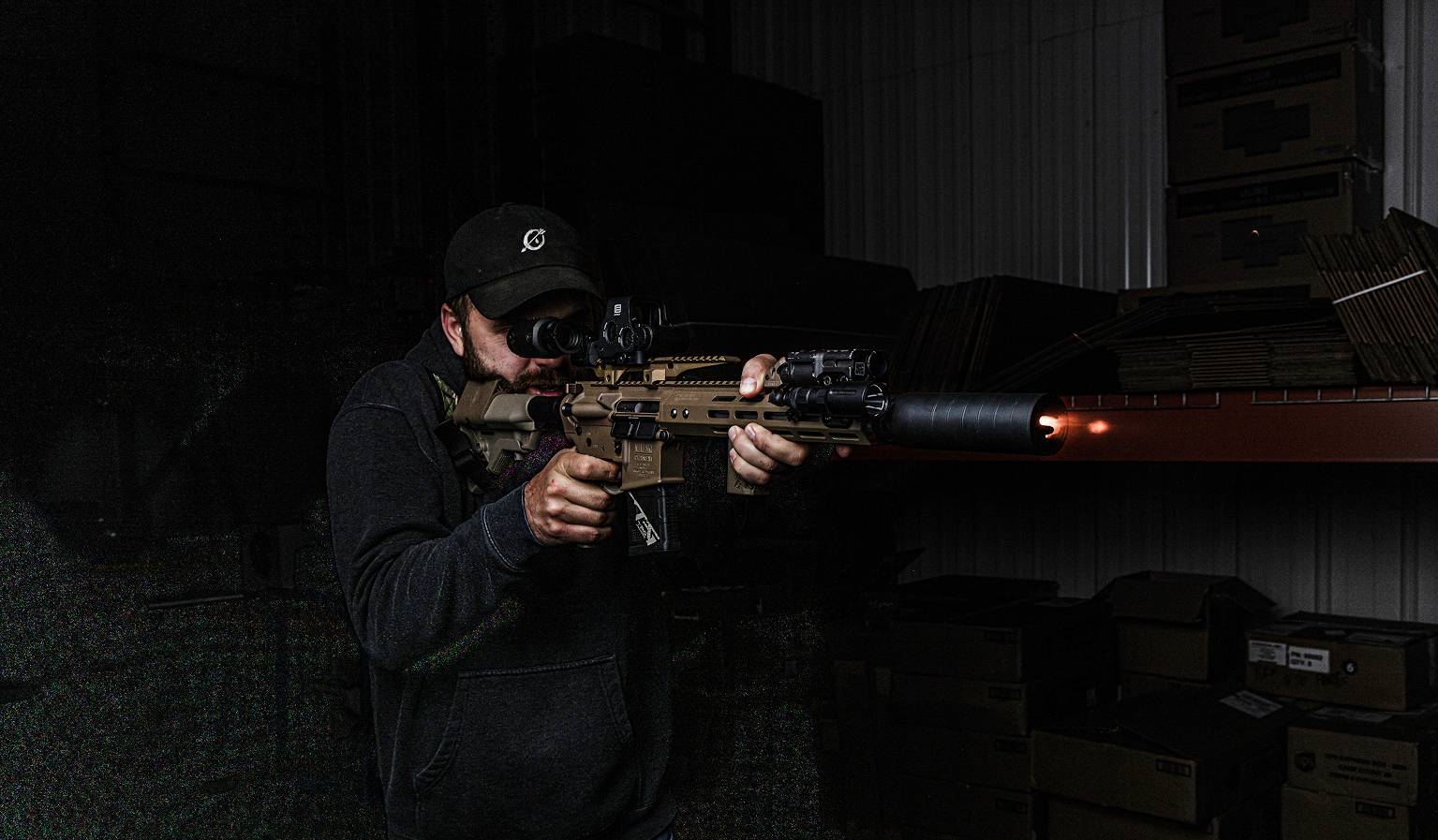
What Is a Low Back Pressure Silencer? Understanding the Pros and Cons
Silencer technology has evolved dramatically over the past decade. As shooters continue to demand quieter firearms, reduced recoil, and better overall performance, manufacturers have developed a variety of approaches to managing the massive volume of gas produced when a cartridge is fired.
One of the most talked-about developments in recent years is the rise of the “Low Back Pressure” silencer.
But what exactly does Low Back Pressure mean, and is it the right solution for every shooter?
The Basics of Silencer Design
To understand Low Back Pressure silencers, it helps to first understand how a traditional silencer works.
When a round is fired, high-pressure gases rapidly expand behind the bullet. These gases are responsible for much of the noise associated with a gunshot. Traditional silencers reduce sound by capturing and slowing those gases within a series of internal chambers and baffles.
By giving the gases more space to expand and cool before they exit the muzzle, a silencer significantly reduces noise, flash, and recoil.
For decades, this basic concept has proven highly effective.
What Is a Low Back Pressure Silencer?
A Low Back Pressure silencer takes a different approach.
Rather than trapping as much gas as possible within the silencer body, Low Back Pressure designs intentionally create pathways that direct gases forward and out of the silencer in a controlled manner.
The goal isn’t necessarily to hold gas longer—it’s to manage where that gas goes and how it exits the system.
By allowing gases to continue moving through the silencer, Low Back Pressure designs can reduce the amount of pressure that gets pushed back into the firearm.
This characteristic is commonly referred to as reduced backpressure.
Understanding Backpressure
Backpressure occurs when a silencer slows and restricts gas flow enough that some of that pressure is redirected back toward the firearm’s action.
On semi-automatic rifles, this can lead to several noticeable effects:
- Increased gas at the shooter’s face
- More carbon buildup inside the firearm
- Faster bolt velocity
- Increased wear on moving components
- More heat entering the action
Anyone who has spent time shooting a suppressed AR-platform rifle has likely experienced at least some of these effects.
Reducing backpressure has become a major focus for many silencer manufacturers because it can improve the overall shooting experience, particularly on gas-operated firearms.
Advantages of Low Back Pressure Designs
Low Back Pressure silencers offer several benefits.
Reduced Gas to the Face
Perhaps the most noticeable benefit is reduced blowback. Shooters often experience less gas escaping around the charging handle and ejection port, making long shooting sessions more comfortable.
Cleaner Operation
With less gas being forced back into the action, rifles often accumulate carbon more slowly. While no silencer eliminates fouling entirely, lower-backpressure systems can help reduce maintenance requirements.
Improved Reliability
Some rifles can become over-gassed when suppressed. Low Back Pressure designs can help minimize changes to the firearm’s operating cycle, reducing the need for tuning or adjustable gas systems.
Excellent Flash Suppression
Many Low Back Pressure silencers perform exceptionally well at controlling muzzle flash, making them attractive for both defensive and hunting applications.
The Tradeoffs
Like any engineering solution, Low Back Pressure silencers involve compromises.
Sound Performance
Because gases are intentionally allowed to continue moving through the silencer, some Low Back Pressure designs may not achieve the same level of sound reduction as the quietest traditional silencers.
The difference varies significantly between designs, but maximizing sound suppression and minimizing backpressure often pull engineers in opposite directions.
Complexity
Low Back Pressure silencers frequently rely on more intricate internal geometries and manufacturing processes. These designs can be challenging to engineer and produce effectively.
Application Matters
Not every firearm benefits equally from a Low Back Pressure design.
For example, a bolt-action hunting rifle doesn’t experience many of the gas-system challenges found in semi-automatic platforms. In these cases, maximum sound reduction may be a higher priority than minimizing backpressure.
Choosing the Right Silencer
The truth is that there is no universally perfect silencer design.
A competition shooter running a short-barreled AR may prioritize reduced backpressure above all else. A hunter carrying a lightweight bolt rifle may care more about sound suppression, weight, and durability. Precision shooters may prioritize consistency and minimal point-of-impact shift.
Understanding how different silencer designs manage gas is the key to selecting the right tool for the job.
Low Back Pressure silencers represent an innovative approach to silencer technology and have introduced valuable solutions to long-standing challenges associated with suppressed semi-automatic firearms. As silencer design continues to evolve, shooters have more options than ever before—and that’s a win for everyone.


Leave a Reply